Dr. Michael Forrest
Scientist, Inventor, Soldier, Entrepreneur
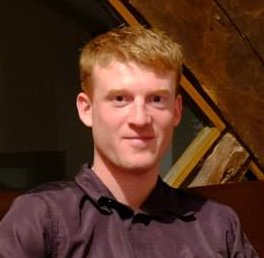
Dr. Michael Forrest is a Cambridge University biochemistry graduate (bachelor's and master's degrees) with an MSc in neuroscience from Edinburgh University and a Ph.D. in computer science from Warwick University.
Possessing rare dual expertise in the biological and computational sciences, Dr. Forrest is a preeminent authority in computational biology. Not least in mathematical and computational modelling of the physics and chemistry of biological systems, which is called biophysical modelling. For example, of metabolism (particularly bioenergetics) and of brain computation.
Distinctively, he has leveraged computational biology to achieve experimentally-validated drug inventions and granted patents. For example, new cancer drugs that work just as he predicted in independent testing by the National Cancer Institute (USA). So, he has demonstrated expertise in drug design as a serial drug inventor.
A prolific author, he's published numerous papers in peer-reviewed journals, including as a sole author, and has published a book titled Biophysics and Computations of the Cerebellar Purkinje Neuron. He discovered that the sodium-potassium pump is a computational element in brain computation, which was so novel that this discovery was blocked (from publication) by peers for years. It has since been published, is now consensus, and it newly explains some brain diseases (e.g., Alternating Hemiplegia of Childhood, AHC), shining the way to treatments.
More recently, Dr. Forrest has discovered that IF1 protein controls aging rate, explaining why different mammal species have different maximal lifespans, which is similarly being resisted. He has leveraged this fundamental discovery to invent an anti-aging drug candidate that works just as he predicted in vivo (in mice), which could be a single drug for the many varied diseases and maladies of aging, such as Alzheimer's disease. Rigorous imagination that can successfully predict is an innate, valuable moat.
In other work, Dr. Forrest has discovered that (just as he predicted) almitrine, an approved emphysema drug with minimal side-effects compared to present cancer drugs, has potent anticancer activity. Moreover, he has discovered gene expression biomarkers to predict which present cancer drug is likely best for any given patient's cancer. He's developed new mathematical methods, e.g., for use in phylogenetics, computational neuroscience, and artificial intelligence (AI). Plus, published in the Journal of Cosmology a theory of why there is something rather than nothing (reasoning by informational parsimony).
Resourceful, without patent lawyers, he's prosecuted pharmaceutical patents to grant by himself in many countries and so has demonstrated expertise in patent law and its practice in varied jurisdictions - from the USA to Israel to Australia, etc.
Dr. Forrest is the founder of biotechnology company Biophysical Therapeutics (IF1 is its consumer brand), which has given him a breadth of business experience: e.g., from accounting to marketing. Earlier, he worked at the famous "Nobel Prize factory" MRC Laboratory of Molecular Biology (Cambridge), RIKEN Brain Science Institute (Tokyo), and Bioinformatics Institute (Singapore). He is a veteran (Afghanistan; Parachute Regiment Reserve, an elite unit), having passed demanding selection for – among other things – determination, teamwork, and mission-before-self. From a disadvantaged background, he won merit-based government scholarships at every level of education from secondary school onwards. From the prestigious Medical Research Council for all his graduate studies.
Inventiveness is rare. To be granted a patent, the applicant must persuade the examiner that it is an inventive step beyond the reach of a Person of Ordinary Skill in the Art (POSA). POSA is at least a Ph.D. holder in the field and can be an interdisciplinary team of Ph.D. holders. Dr. Forrest's talent is his legally-proven inventiveness, which is such that POSA typically resists his inventions even after the fact, and so he commonly has periods of his work being non-consensus but correct. The archetype of a career-defining investment opportunity. Especially when there are the green shoots of consensus already forming, such as the famous Professor George Church (Harvard Medical School) joining Biophysical Therapeutics. Moreover, when the scale of the opportunity is a problem that everyone has. Everyone Ages.